They say it takes a village to raise a child. It takes at least three — Torridon, Shieldaig, Kinlochewe — to raise a Celtman.
These villages open their doors, their hearts and their muddy, muddy fields to allow this magnificent/malevolent event to take place.
What can I say? It's been bubbling along in the back of my mind for over a decade, but family life never quite aligned. I finally threw my hat into the ring last October, knowing how notoriously hard it is to land a spot, and was delighted/terrified in equal measure to be offered a place.
If you need the industrial machinery of other long-distance events, with their blue carpets, slick, pristine transition areas and their shiny medals, then this isn't for you. But if you're happy to get your feet dirty and become part of a supportive global family — and you're prepared to put the effort in — then start by RTFM.
And if that doesn't put you off, put your name into the ballot and pray to the Celtman gods you don't get a place!
This is not an easy triathlon. And this is not an easy part of Scotland to hold a triathlon. It's remote, the roads are tiny, there is A LOT OF MUD, and for some reason the jellyfish love the chilly coastal waters. Then factor in the weather, which can flip at the flick of a switch from balmy sunshine to wind-driven hail. And the midges? A fine balance between eating you alive and keeping tourist numbers to a manageable level.
We got up at 2am to set up for a 5am start, then were transported like sacrificial offerings around the headland from Shieldaig. We huddled together in a field of sheep shit, warmed by the slightly maniacal Celtic drummers and the burning, Wicker Man-esque Celtman logo, before being herded into the cold Atlantic to hopefully escape back to the mainland.
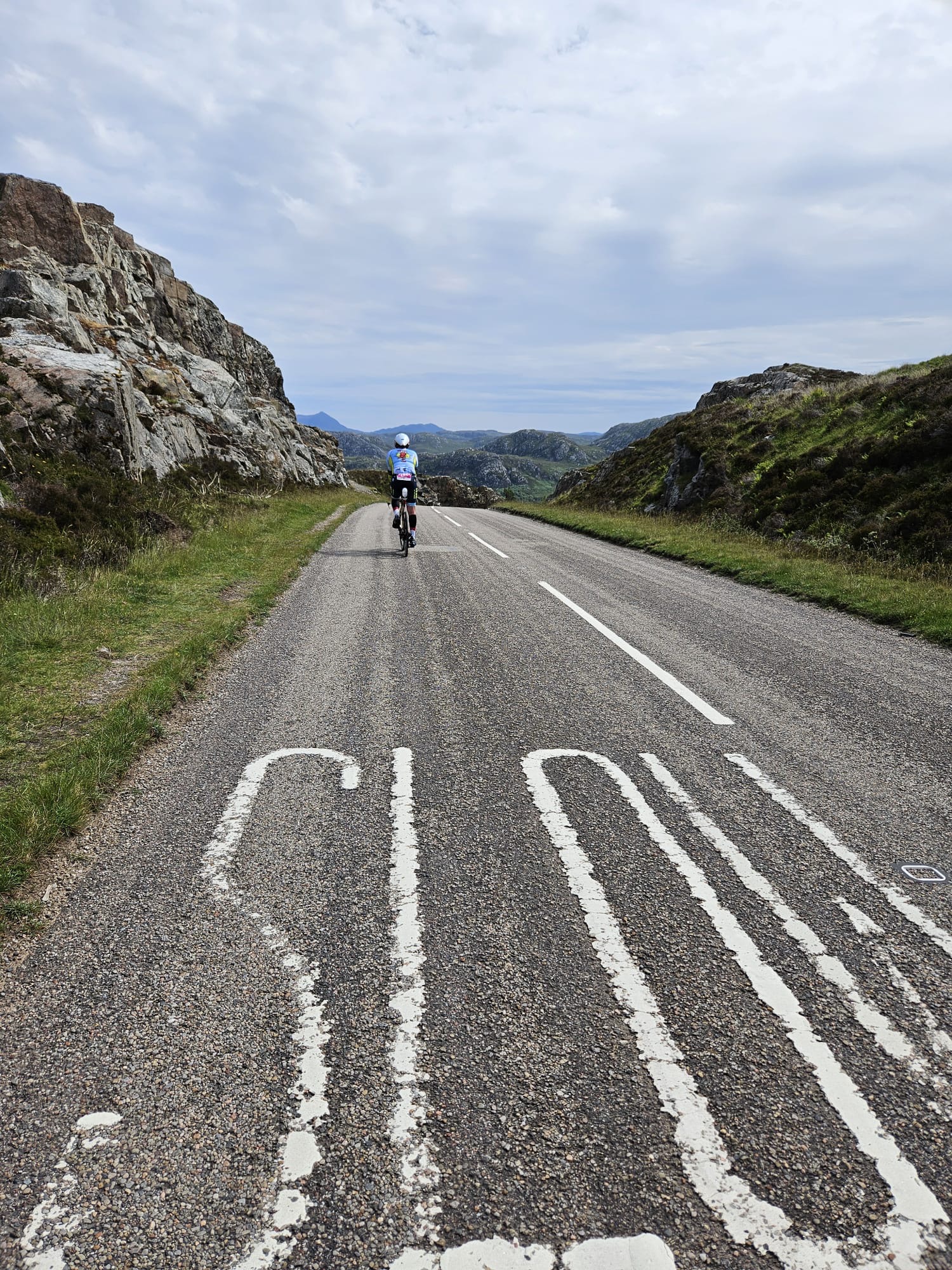
I emerged from the chilled jellyfish soup, numb to the core, glad that my support crew had remembered a bucket of warm water to wash off the salt. I climbed onto my bike and started pedalling, a strong tailwind blowing me nicely up the valley.
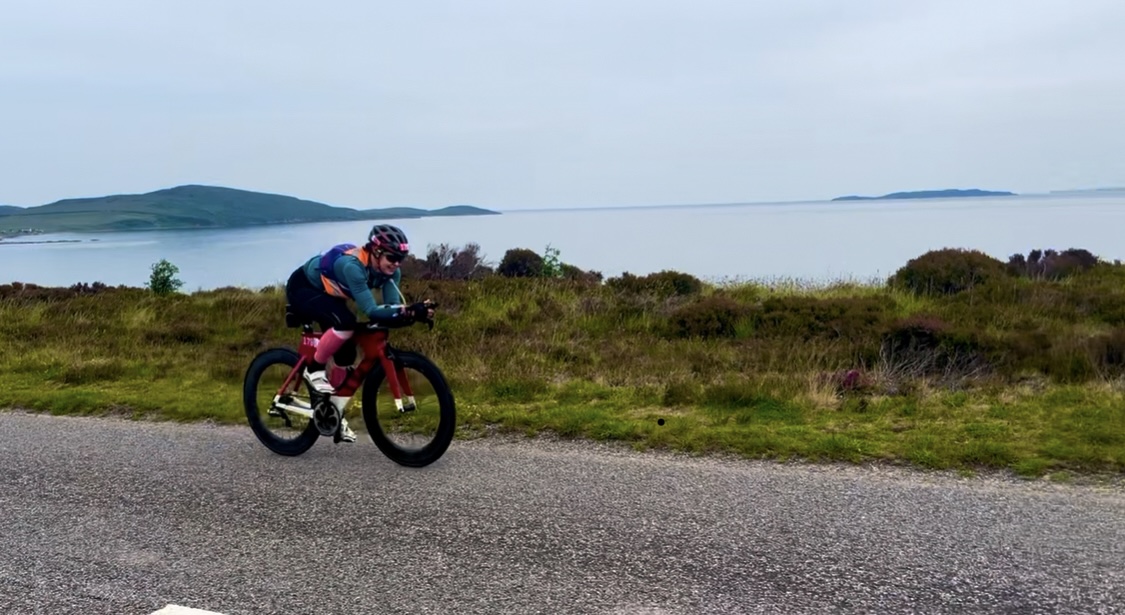
That tailwind wasn't behind me all the way, though. Turning at Kinlochewe, I started feeling it nudge at my side, handlebars twitching every time a gust caught my deep-rimmed front wheel. I tucked in and settled in for the 175km back, telling myself this was the hard part.
My nutrition was homemade sunflower seed energy bar (recipe on request) and potatoes boiled in salt, washed down with plenty of fluid. My support crew, Fiona and Danny, were battling traffic, other competitors, narrow roads and the weather to keep me supplied and fix any mechanical issues; they were as much a part of the race as I was.
Then came the roadworks. While it was a forced opportunity to get off the saddle, rest and chat to fellow racers for a few minutes, the clock was still going tick, tick, tick.
The route took us over roads high above the sea, with zero shelter from the strong westerlies and driving rain. It was relentless. The climbs were a chance to warm up; the descents, a white-knuckle fight to stay upright as the wind whipped the bike around under me. I heard later of more than one rider who came a cropper.
There was the delightful downhill run from Corrieshalloch Gorge. Tailwind, sun shining, hitting 50kph — this wasn't bad at all...
Then I turned at Garve to head back to T2 and learned the true definition of headwind. Not just the force of air — the gods of Torridon had decided I was no longer welcome, that I had to fight for my place there. And fight I did, for 40 brutal kilometres.
Back into Kinlochewe for T2 and a forewarning of the conditions to come. Cars stuck fast, priceless carbon TT bikes coated in mud and agricultural shit, athletes trying to keep their feet dry (more fool them). Time to get my running shoes on for the trail run. There had been rumours of boggy paths for the first couple of kilometres. What there actually was: zero path and 200% bog. 2k? More like 5k of actual shin-deep shit, peat and water. "Wash it off in the stream crossing," some had suggested. More like a raging torrent — not the last of the day, either — followed by more bog.
Luckily the next part of the run was too steep for the bog to survive. But it was steep on tired legs. And it went up and up, thoughts of the high mountain route playing heavily on my mind. Over the crest and down, down, down to the Coulin Estate. "Check out the views," we'd been told. Nothing but grey cloud. Mental note: return and check out the views.
My support runner Danny was pacing me in a gentle "get shifting" kind of way, keeping track of our time and whether we could make the cut-off at T2A. Reach it in time and you earned the high mountain route and the blue finisher's T-shirt; after it, the low road and white. The bog had all but taken that chance away, though we'd heard on the grapevine the mountain was shut anyway. I still wanted blue, but we were already burning through precious minutes.
As the chance of blue faded, so did my motivation to push on. It's hard to keep digging when the goal you're chasing is slipping away.
But we made it to T2A — just six minutes behind the cut-off. It's easy to look back and think I could have pushed a bit harder here or there, but honestly I don't think I could have. Even with talk of a five-minute grace for the roadworks on the bike, I still came up short. I blame the bog.
With the clock no longer a factor, we took our time in T2A, preparing for the low route. Still a significant challenge in the prevailing conditions. Full waterproofs from head to toe. Danny changed into dry socks (more fool him) and we set off, marching into the Torridon massif. And still it rained.
We met our friend Sean at T2B, at the mouth of the valley, and he showed us how to skirt the big puddle where the trail began. Oh, how we laughed at the other folk getting wet feet — only to discover the rest of it was 50% path and 150% watercourse.
The climb to the pass was arduous, wet and rough underfoot. A bad trip here would surely end the day, but we reached the watershed at a lively pace and began passing other teams. There were swollen rivers to ford and stepping stones to pick across, some submerged beneath the risen streams. Waterfalls and roaring torrents to take in, too — but keeping a steady foot while watching the scenery was a tough combo.
Torridon Mountain Rescue play a huge role in the Celtman, and here they were — wrapped tight in survival bags, perched on the rocks, keeping an eye on the bedraggled procession coming through. All credit to them for being out there in it.
Danny persuaded me to take on more food, so I ate one of the Marmite and cheese sandwiches Fiona had prepared the day before and sucked down an energy gel. A few minutes later, with the terrain beginning to drop, we began a slow shuffle that matured into a loping gait, and our pace picked up. We ran most of that final trail section through varying terrain: the temperature rose, we passed gorges, crossed bridges, waded through yet more bog, and finally struck tarmac by the lochside. We'd passed a handful of other teams, and the finish was almost in sight around the headland.
There always comes a point in a race where you know you're going to finish, but you just want it to come quickly. The only way to do that is to keep on moving as fast as you can. Those last 3k along the tarmac were hard work and seemed to take forever, but finally we were climbing the last hill to the finish — and what a delight to see friends (both new and old) and family at the line. The Celtman spirit is amazing and uplifting and beautiful, and someone handed me a cold bottle of CELTMAN beer and I drank it all down and it tasted divine.
There is no better way to feel alive.